Google Scholar, Researchmap [日本語], ResearchGate, Academia, Twitter
ORCID ID: https://orcid.org/0000-0002-1197-0315
▼ テーマ別に探す / Browse by Theme
- ISLA・英語教育
- Practice/Skill/Automaticity
- Explicit/Implicit Learning
- Vocabulary
- Individual Differences
- Neuroscience
Books/Edited Volumes (書籍・編著書)

鈴木祐一 (2024)『あたらしい第二言語習得論―英語指導の思い込みを変える』研究社.
【電子書籍】【紹介ページ】【コンパニオンサイト(試し読みあり)】
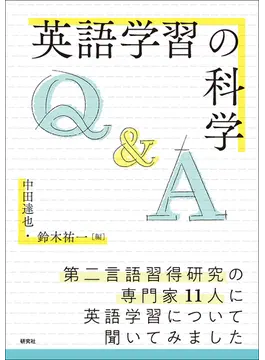
中田達也・鈴木祐一編著 (2022)『英語学習の科学』東京:研究社.
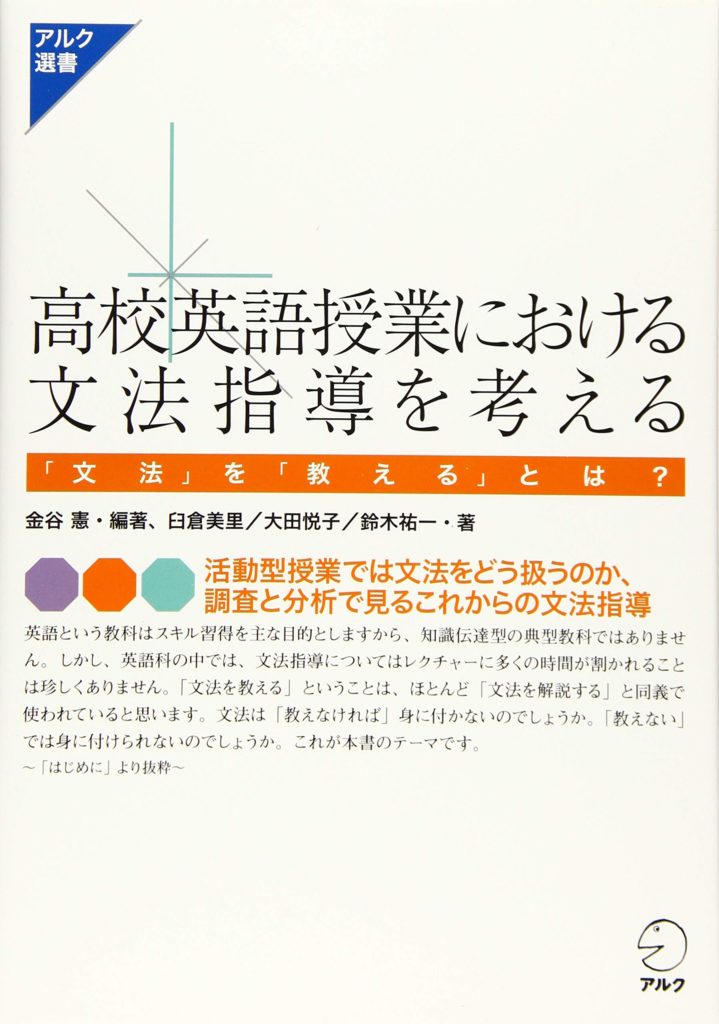
金谷憲・臼倉美里・大田悦子・鈴木祐一(2020)『高校英語授業における文法指導を考える―「文法」 を「教える」 とは?―』東京: アルク.
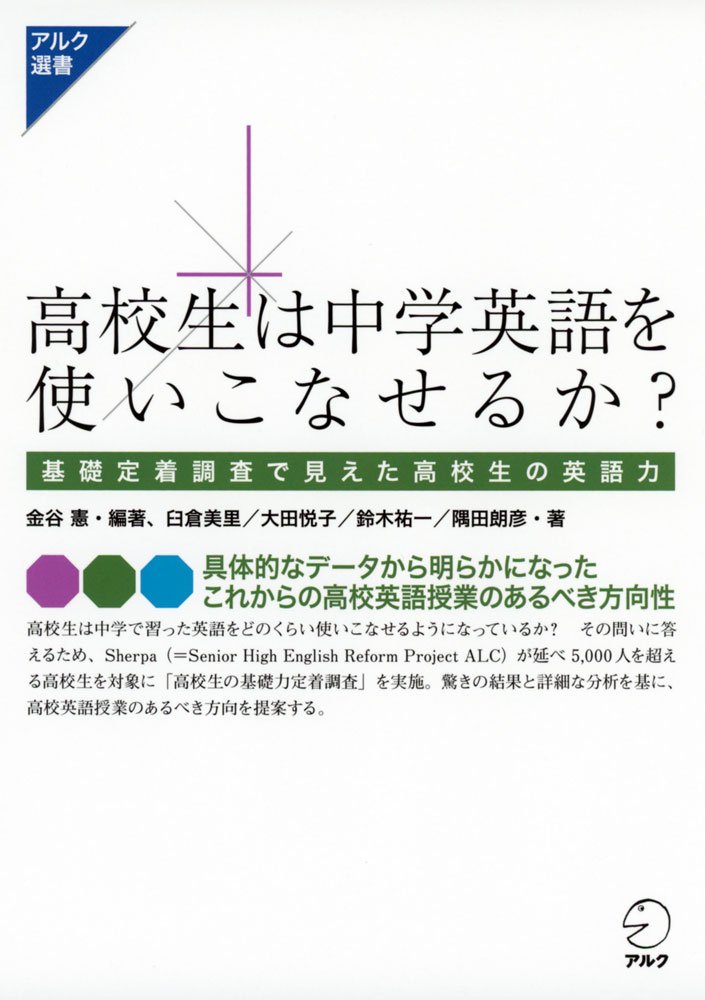
金谷憲・ 臼倉美里・大田悦子・鈴木祐一・墨田朗彦(2017)『高校生は中学英語を使いこなせるか?~基礎定着調査で見えた高校生の英語力~』東京: アルク.
Peer-Reviewed Journal Articles (査読付き学術論文)
- 鈴木祐一. (2026). ISLA研究の知見を活かした英語授業デザイン―3つの視点からの提案―. JACET中部支部紀要, 23, 1-12. https://doi.org/10.34545/jacetchubu.23.0_1 [Open Access Link]
- Suzuki, Y. & Nakamura, S. (2026). Pre-task Vocabulary Support Enhances Lexical Learning but Dampens Positive Emotions: Interactive Task Implementation in EFL Classroom. TESOL Quarterly, Early View. https://doi.org/https://doi.org/10.1002/tesq.70054 [Open Access Link]
- Chen, L., Suzuki, Y., Lambert, C. (2025). L1 and L2 Use in Pre-task Planning and Task Repetition: The Role of Proficiency. Applied Linguistics. Early View. https://doi.org/10.1093/applin/amaf059 [Open Access Link]
- 関東甲信越英語教育学会・研究推進委員会. (2018). 高校生は中学英語をどの程度使いこなせるか―中学英語定着テスト間の相関とセンター試験との関連―. KATE Journal, 32, p. 115-128. [PDF] [Journal Page]
- 臼倉美里・鈴木祐一 (2025). 「活動重視の「英語コミュニケーション」の授業における文法指導の在り方―TANABU Model実践者へのインタビュー調査―」KATE Journal, 32, p. 239-252.
- He, J., & Suzuki, Y. (2024). Distribution of grammar learning through writing tasks: A potential role of proficiency. International Journal of Applied Linguistics, 34(1), 367-382. https://doi.org/10.1111/ijal.12498 [Open Access Link]
- Hanzawa, K., & Suzuki, Y. (2023). How do learners perceive task repetition? Distributed practice effects on engagement and metacognitive judgment. The Modern Language Journal, 107(2), 451-478. https://doi.org/10.1111/modl.12843 [Open Access Link] Best of MLJ for 2023
- Hamada, Y. & Suzuki, Y. (2022) Situating Shadowing in the Framework of Deliberate Practice: A Guide to Using 16 Techniques. RELC Journal, 55(1), 219-227.
https://doi.org/10.1177/00336882221087508 [PDF] [Journal Page] - Suzuki, Y., & Hanzawa, K. (2021). Massed task repetition is a double-edged sword for fluency development: An EFL classroom study. Studies in Second Language Acquisition, 44(2), 536-561. https://doi.org/10.1017/S0272263121000358 [Open Access Link]
- Suzuki, Y., Nakata, T., & DeKeyser, R. M. (2019). Optimizing second language practice in the classroom: Perspectives from cognitive psychology. The Modern Language Journal, 103, 551-561. https://doi.org/10.1111/modl.12582 [PDF] [Jounal Page]
- 鈴木祐一. (2017). 「日本人高校生にはどれくらいの英文処理速度が必要か?―大学センター試験「英語」の分析から―」『神奈川大学言語研究』39巻, 1-20. [PDF]
- Suzuki, Y. (2010). When does chunk reading help learners’ comprehension? – On relative clause – LEO (東京学芸大学大学院 英語研究会誌), 39, 1-24. [PDF]
Books/Edited Volumes (書籍・編著書)
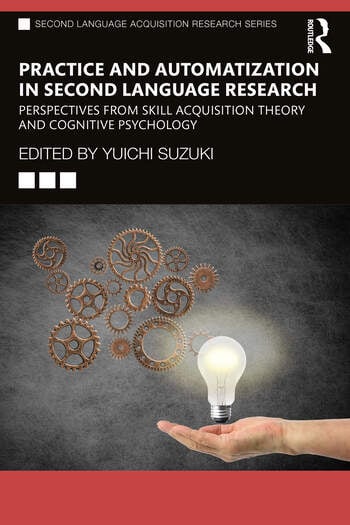
Suzuki, Y. (Ed.) (2023). Practice and automatization in second language research: Perspectives from skill acquisition theory and cognitive psychology. New York: Routledge.
【紹介ページ】【試し読み】You can read sample in Google Books.
Peer-Reviewed Journal Articles (査読付き学術論文)
- Hanzawa, K., Suzuki, Y., Yanagisawa, A., & Fukuta, J. (2026). A scoping review of oral task repetition: Evolving concepts for speaking skills development. Research Methods in Applied Linguistics, 5(1), 100292. https://doi.org/https://doi.org/10.1016/j.rmal.2025.100292 [Open Access Link]
- Suzuki, Y., Maie, R., & Hui, B. (2025). Research timeline: Automatization in second language learning. Language Teaching, 1-20. Early View. https://doi.org/10.1017/S026144482500059X [Open Access Link]
- Hanzawa, K., & Suzuki, Y. (2023). Does automaticity in lexical and grammatical processing predict utterance fluency development?: A six-month longitudinal study in Japanese EFL context. Journal of Second Language Studies, 6(2), 290-318. https://doi.org/10.1075/jsls.22007.han [PDF] [Journal Page]
- Nakata, T., Suzuki, Y., & He, X. (2023). Costs and Benefits of Spacing for Second Language Vocabulary Learning: Does Relearning Override the Positive and Negative Effects of Spacing? Language Learning, 73(3), 799-834.
https://doi.org/10.1111/lang.12553 [Open Access Link] - Suzuki, Y., Eguchi, M., & de Jong, N. (2022). Does the reuse of constructions promote fluency development in task repetition? A usage-based perspective. TESOL Quarterly, 56(4), 1290-1319. https://doi.org/10.1002/tesq.3103 [PDF] [Journal Page]
- Suzuki, Y. (2021). Optimizing fluency training for speaking skills transfer: Comparing the effects of blocked and interleaved task repetition. Language Learning, 71(2), 285-325. https://doi.org/10.1111/lang.12433 [PDF] [Journal Page]
- Eguchi, M., Suzuki, S., & Suzuki, Y. (2021). Lexical competence underlying second language word association tasks: Examining the construct validity of response type and response time measures. Studies in Second Language Acquisition, 44(1), 112-142. https://doi.org/10.1017/S0272263121000164 [Journal Page]
- Vafaee, P., & Suzuki, Y. (2020). The relative significance of syntactic knowledge and vocabulary knowledge in second language listening ability. Studies in Second Language Acquisition, 42(2), 383-410. https://doi.org/10.1017/S0272263119000676 [PDF] [Journal Page]
- Suzuki, Y., Nakata, T., & DeKeyser, R. M. (2020). Empirical feasibility of the desirable difficulty framework: Toward more systematic research on L2 practice for broader pedagogical implications. The Modern Language Journal, 104(1), 313-319. https://doi.org/10.1111/modl.12625 [PDF] [Journal Page]
- Nakata, T., & Suzuki, Y. (2019). Mixing grammar exercises facilitates long-term retention: Effects of blocking, interleaving, and increasing practice. The Modern Language Journal, 103(3), 629-647. https://doi.org/10.1111/modl.12581 [PDF] [Journal Page]
- Suzuki, Y., Nakata, T., & DeKeyser, R. M. (2019). The desirable difficulty framework as a theoretical foundation for optimizing and researching second language practice. The Modern Language Journal, 103(3), 713-720. https://doi.org/10.1111/modl.12581 [PDF] [Journal Page]
- Suzuki, Y., & Sunada, M. (2019). Dynamic interplay between practice type and practice schedule in a second language: The potential and limits of skill transfer and practice schedule. Studies in Second Language Acquisition, 42(1), 169-197. https://doi.org/10.1017/S0272263119000470 [PDF] [Journal Page]
- Nakata, T., & Suzuki, Y. (2019). Effects of massing and spacing on the learning of semantically related and unrelated words. Studies in Second Language Acquisition, 41(2), 287-311. https://doi.org/10.1017/S0272263118000219 [PDF] [Journal Page]
- Suzuki, Y., & Sunada, M. (2018). Automatization in second language sentence processing: Relationship between elicited imitation and maze tasks. Bilingualism: Language and Cognition, 21(1), 32-46. https://doi.org/10.1017/S1366728916000857 [PDF] [Journal Page]
- Suzuki, Y. (2017). The optimal distribution of practice for the acquisition of L2 morphology: A conceptual replication and extension. Language Learning, 67(3): 512–545. https://doi.org/10.1111/lang.12236 [PDF] [Journal Page] The IRIS Replication Award
- Suzuki, Y. & DeKeyser, R. M. (2017). Effects of distributed practice on the proceduralization of morphology. Language Teaching Research, 21(2), 166-188. https://doi.org/10.1177/1362168815617334 [PDF] [Journal Page]
Book Chapters(書籍分担執筆)
- DeKeyser, R. M., & Suzuki, Y. (2025). Skill acquisition theory. In B. VanPatten, G. D. Keating, & S. Wulff (Eds.), Theories in second language acquisition: An introduction (4th ed., pp. 157-182). Routledge. [PDF][Publisher’s page]
- Suzuki, Y. (2024). Skill acquisition theory: Learning-to-use and usage-for-learning in SLA. In K. McManus (Ed.), Usage in second language acquisition: Critical reflections and future directions (pp. 147-168). New York: Routledge. [PDF] [Publisher’s page]
- Suzuki, Y. (2023). Introduction: Practice and automatization in a second language. In Y. Suzuki (Ed.), Practice and automatization in second language research: Perspectives from skill acquisition theory and cognitive psychology (pp. 1-36). New York, NY: Routledge. [PDF] [Publisher’s page]
- Suzuki, Y., Nakata, T., & Rogers, J. (2023). Optimizing input and intake processing: A role for practice and explicit learning. In Y. Suzuki (Ed.), Practice and automatization in second language research: Perspectives from skill acquisition theory and cognitive psychology (pp. 39-62). New York, NY: Routledge. [PDF] [Publisher’s page]
- Suzuki, Y., & Elgort, I. (2023). Measuring automaticity in a second language: A methodological synthesis of experimental tasks over three decades (1990-2021). In Y. Suzuki (Ed.), Practice and automatization in second language research: Perspectives from skill acquisition theory and cognitive psychology (pp. 206-234). New York, NY: Routledge. [PDF] [Publisher’s page]
- Suzuki, Y. (2023). Conclusion: Future directions of practice and automatization research. In Y. Suzuki (Ed.), Practice and automatization in second language research: Perspectives from skill acquisition theory and cognitive psychology (pp. 265-282). New York, NY: Routledge. [PDF] [Publisher’s page]
- Suzuki, Y. (2022). Automatization and practice. In A. Godfroid & H. Hopp (Eds.), The Routledge Handbook of Second Language Acquisition and Psycholinguistics (pp. 308-321). New York: Routledge. [PDF] [Publisher’s page]
- Suzuki, Y. (2021). The cognitive approach. In T. Gregersen & S. Mercer (Eds.), The Routledge Handbook of Psychology of Language Learning (pp. 7-21). New York, NY: Routledge. [PDF] [Publisher’s page]
Peer-Reviewed Journal Articles (査読付き学術論文)
- Suzuki, Y., & Crowther, D. (2024). Addressing the Role of “Linguistic Knowledge” in Global Englishes Pedagogy. TESOL Quarterly, 59(1), 529-540. https://doi.org/10.1002/tesq.3343 [Open Access Link]
- Suzuki, Y., Jeong, H., Cui, H., Okamoto, K., Kawashima, R., & Sugiura, M. (2023). fMRI reveals the dynamic interface between explicit and implicit knowledge recruited during elicited imitation task. Research Methods in Applied Linguistics, 2(2), 100051. https://doi.org/10.1016/j.rmal.2023.100051 [Open Access Link]
- Suzuki, Y., Jeong, H., Cui, H., Okamoto, K., Kawashima, R., & Sugiura, M. (2023). An fMRI validation study of the word-monitoring task as a measure of implicit knowledge: Exploring the role of explicit and implicit aptitudes in behavioral and neural processing. Studies in Second Language Acquisition, 45(1), 109-136. https://doi.org/10.1017/S0272263122000043 [Open Access Link]
- Suzuki, Y. & DeKeyser, R. (2017). The interface of explicit and implicit knowledge in a second language: Insights from individual differences in cognitive aptitudes. Language Learning, 67(4), 747-790. https://doi.org/10.1111/lang.12241 [PDF] [Journal Page]
- Suzuki, Y. (2017). Validity of new measures of implicit knowledge: Distinguishing implicit knowledge from automatized explicit knowledge. Applied Psycholinguistics, 38(5): 1229-1261. https://doi.org/10.1017/S014271641700011X [PDF] [Journal Page]
- Vafaee, P., Suzuki, Y., & Kachinske, I. (2017). Validating grammaticality judgment tests: Evidence from two new psycholinguistic measures. Studies in Second Language Acquisition, 39(1), 59-95. https://doi.org/10.1017/S0272263115000455 [PDF] [Journal Page] The 2017 Albert Valdman Award
- Suzuki, Y. & DeKeyser, R. (2015). Comparing elicited imitation and word monitoring as measures of implicit knowledge. Language Learning, 65(4), 860-895.
https://doi.org/10.1111/lang.12138 [PDF] [Journal Page]
Book Chapters(書籍分担執筆)
- Suzuki, Y., & DeKeyser, R. M. (in press). Knowledge and skill in ISLA. In S. Loewen & M. Sato (Eds.), The Routledge handbook of instructed second language acquisition (2nd ed.). Routledge.
- Suzuki, Y., & DeKeyser, R. M. (in press). Explicit knowledge and skill acquisition in second language learning. In C. Chapelle (Ed.) Encyclopedia of Applied Linguistics (2d ed.) Oxford, UK; Wiley. [PDF][Publisher’s page]
- Suzuki, Y., DeKeyser, R. M., & Huang, H. Y. (2023). Implicit (not explicit) learning aptitude predicts the acquisition of difficult (not easy) structure: A visual-world eye-tracking study. In E. Wen, P. Skehan, & R. Sparks (Eds.), Language Aptitude Theory and Practice (pp. 381-413). New York, NY: Cambridge University Press. [PDF] [Publisher’s page]
- 鈴木祐一 (2021).「第二言語環境で日本語の文法知識はどのように発達していくか?-文法項目の特徴と学習者の個人差の影響」鈴木渉・佐久間康之・寺澤孝文 (編著)『外国語学習での暗示的・明示的知識の役割とは何か』(pp. 33-48) 東京:大修館書店.
Peer-Reviewed Journal Articles (査読付き学術論文)
- Suzuki, Y. & Nakamura, S. (2026). Pre-task Vocabulary Support Enhances Lexical Learning but Dampens Positive Emotions: Interactive Task Implementation in EFL Classroom. TESOL Quarterly, Early View. https://doi.org/https://doi.org/10.1002/tesq.70054 [Open Access Link]
- Suzuki, Y., Nozawa, T., Uchihara, T., Nakamura, S., Miyazaki, A., & Jeong, H. (2025). Timing matters for interactive task-based learning: Effects of vocabulary practice on learning multiword expressions and neural synchronization. Studies in Second Language Acquisition, 47(4), 1018-1043. https://doi.org/10.1017/S0272263125101290. [Open Access Link]
- Suzuki, Y., Nakata, T., & He, X. (2024). Efficiency trumps aptitude: Individualizing computer-assisted second language vocabulary learning. ReCALL, 37(1), 96-113. https://doi.org/10.1017/S095834402400020X [Open Access Link]
- Nakata, T., Suzuki, Y., & He, X. (2023). Costs and Benefits of Spacing for Second Language Vocabulary Learning: Does Relearning Override the Positive and Negative Effects of Spacing? Language Learning, 73(3), 799-834.
https://doi.org/10.1111/lang.12553 [Open Access Link] - Suzuki, Y., Eguchi, M., & de Jong, N. (2022). Does the reuse of constructions promote fluency development in task repetition? A usage-based perspective. TESOL Quarterly, 56(4), 1290-1319. https://doi.org/10.1002/tesq.3103 [PDF] [Journal Page]
- Eguchi, M., Suzuki, S., & Suzuki, Y. (2021). Lexical competence underlying second language word association tasks: Examining the construct validity of response type and response time measures. Studies in Second Language Acquisition, 44(1), 112-142. https://doi.org/10.1017/S0272263121000164 [Journal Page]
- Vafaee, P., & Suzuki, Y. (2020). The relative significance of syntactic knowledge and vocabulary knowledge in second language listening ability. Studies in Second Language Acquisition, 42(2), 383-410. https://doi.org/10.1017/S0272263119000676 [PDF] [Journal Page]
- Nakata, T., & Suzuki, Y. (2019). Effects of massing and spacing on the learning of semantically related and unrelated words. Studies in Second Language Acquisition,41(2), 287-311. https://doi.org/10.1017/S0272263118000219 [PDF] [Journal Page]
Peer-Reviewed Journal Articles (査読付き学術論文)
- Nakata, Y., Martin, A. J., Suzuki, Y., & Gao, X. (2026). Students’ willingness to communicate in the foreign language learning classroom: Exploring the roles of classroom support and psychological needs satisfaction. British Journal of Educational Psychology. https://doi.org/https://doi.org/10.1111/bjep.70070 [Open Access Link]
- Suzuki, Y., Nakata, T., & He, X. (2024). Efficiency trumps aptitude: Individualizing computer-assisted second language vocabulary learning. ReCALL, 37(1), 96-113. https://doi.org/10.1017/S095834402400020X [Open Access Link]
- Suzuki, Y. (2021). Individual differences in memory predict changes in breakdown and repair fluency but not speed fluency: A short-term fluency training intervention study. Applied Psycholinguistics, 42(4), 969-995. https://doi.org/10.1017/S0142716421000187 [Open Access Link]
- Suzuki, Y. (2021). Probing the Construct Validity of LLAMA_D as a Measure of Implicit Learning Aptitude: Incidental Instructions, Confidence Ratings, and Reaction Time Measure. Studies in Second Language Acquisition, 43(3), 663-676. https://doi.org/10.1017/S0272263120000704 [Open Access Link]
- Saito, K., Cui, H., Suzukida, Y., Dardon, D. E., Suzuki, Y., Jeong, H., Révész, A., Sugiura, M., Tierney, A. (2022). Does domain-general auditory processing uniquely explain the outcomes of second language speech acquisition, even once cognitive and demographic variables are accounted for? Bilingualism: Language and Cognition, 25(5), 856-868. https://doi.org/10.1017/S1366728922000153 [Open Access Link]
- Suzuki, Y., Yokosawa, S., Aline, D. (2020). The role of working memory in blocked and interleaved grammar practice: Proceduralization of L2 syntax. Language Teaching Research, 26(4), 671-695. https://doi.org/10.1177/1362168820913985 [PDF] [Journal Page]
- Suzuki, Y. (2019). Individualization of practice distribution in second language grammar learning: A role of metalinguistic rule rehearsal ability and working memory capacity. Journal of Second Language Studies, 2(2), 170–197. https://doi.org/10.1075/jsls.18023.suz [PDF] [Journal Page]
- Suzuki, Y. (2018). The role of procedural learning ability in automatization of L2 morphology under different learning schedules: An exploratory study. Studies in Second Language Acquisition, 40(4), 923-937. https://10.1017/S0272263117000249 [PDF] [Journal Page]
- Suzuki, Y. & DeKeyser, R. (2017). Exploratory research on L2 practice distribution: An aptitude-by-treatment interaction. Applied Psycholinguistics, 38(1), 27-56. https://doi.org/10.1017/S0142716416000084 [PDF] [Journal Page]
Book Chapters(書籍分担執筆)
- Suzuki, Y. (2022). Individual Difference Factors for Second Language Grammar. In S. Li, P. Hiver, & P. Mostafa (Eds.), The Routledge Handbook of Second Language Acquisition and Individual Differences (pp. 294-309). New York: Routledge. [PDF] [Publisher’s page]
Peer-Reviewed Journal Articles (査読付き学術論文)
- Suzuki, Y., Nozawa, T., Uchihara, T., Nakamura, S., Miyazaki, A., & Jeong, H. (2025). Timing matters for interactive task-based learning: Effects of vocabulary practice on learning multiword expressions and neural synchronization. Studies in Second Language Acquisition, 47(4), 1018-1043. https://doi.org/10.1017/S0272263125101290. [Open Access Link]
- Liu, C., Jeong, H., Cui, H., Dewaele, J.-M., Okamoto, K., Suzuki, Y., & Sugiura, M. Effects of social interactions on the neural representation of emotional words in late bilinguals. Language, Cognition and Neuroscience, 39(3), 383-399. https://doi.org/10.1080/23273798.2024.2307630 [Open Access Link]
- Suzuki, Y., Jeong, H., Cui, H., Okamoto, K., Kawashima, R., & Sugiura, M. (2023). fMRI reveals the dynamic interface between explicit and implicit knowledge recruited during elicited imitation task. Research Methods in Applied Linguistics, 2(2), 100051. https://doi.org/10.1016/j.rmal.2023.100051 [Open Access Link]
- Suzuki, Y., Jeong, H., Cui, H., Okamoto, K., Kawashima, R., & Sugiura, M. (2023). An fMRI validation study of the word-monitoring task as a measure of implicit knowledge: Exploring the role of explicit and implicit aptitudes in behavioral and neural processing. Studies in Second Language Acquisition, 45(1), 109-136. https://doi.org/10.1017/S0272263122000043 [Open Access Link]
全業績リスト(年代順)/Full Publication List
Books/Edited Volumes (書籍・編著書)
- 鈴木祐一 (2024)『あたらしい第二言語習得論―英語指導の思い込みを変える』研究社.
【電子書籍】【紹介ページ】【コンパニオンサイト(試し読みあり)】 - Suzuki, Y. (Ed.) (2023). Practice and automatization in second language research: Perspectives from skill acquisition theory and cognitive psychology. New York: Routledge.【紹介ページ】【試し読み】You can read sample in Google Books.
- 中田達也・鈴木祐一編著 (2022)『英語学習の科学』東京:研究社.
- 金谷憲・臼倉美里・大田悦子・鈴木祐一(2020)『高校英語授業における文法指導を考える―「文法」 を「教える」 とは?―』東京: アルク.
- Suzuki, Y., Nakata, T., & DeKeyser, R. M. (2019). Optimizing second language practice in the classroom: Perspectives from cognitive psychology. The Modern Language Journal, 103, 551-561. (Guest Editor)
- 金谷憲・ 臼倉美里・大田悦子・鈴木祐一・墨田朗彦(2017)『高校生は中学英語を使いこなせるか?~基礎定着調査で見えた高校生の英語力~』東京: アルク.
Peer-Reviewed Journal Articles (査読付き学術論文)
- Nakata, Y., Martin, A. J., Suzuki, Y., & Gao, X. (2026). Students’ willingness to communicate in the foreign language learning classroom: Exploring the roles of classroom support and psychological needs satisfaction. British Journal of Educational Psychology. https://doi.org/https://doi.org/10.1111/bjep.70070 [Open Access Link]
- Suzuki, Y. & Nakamura, S. (2026). Pre-task Vocabulary Support Enhances Lexical Learning but Dampens Positive Emotions: Interactive Task Implementation in EFL Classroom. TESOL Quarterly, Early View. https://doi.org/https://doi.org/10.1002/tesq.70054 [Open Access Link]
- Hanzawa, K., Suzuki, Y., Yanagisawa, A., & Fukuta, J. (2026). A scoping review of oral task repetition: Evolving concepts for speaking skills development. Research Methods in Applied Linguistics, 5(1), 100292. https://doi.org/https://doi.org/10.1016/j.rmal.2025.100292 [Open Access Link]
- Suzuki, Y., Nozawa, T., Uchihara, T., Nakamura, S., Miyazaki, A., & Jeong, H. (2025). Timing matters for interactive task-based learning: Effects of vocabulary practice on learning multiword expressions and neural synchronization. Studies in Second Language Acquisition, 47(4), 1018-1043. https://doi.org/10.1017/S0272263125101290. [Open Access Link]
- Chen, L., Suzuki, Y., Lambert, C. (2025). L1 and L2 Use in Pre-task Planning and Task Repetition: The Role of Proficiency. Applied Linguistics. Early View. https://doi.org/10.1093/applin/amaf059 [Open Access Link]
- 臼倉美里・鈴木祐一 (2025). 「活動重視の「英語コミュニケーション」の授業における文法指導の在り方―TANABU Model実践者へのインタビュー調査―」KATE Journal, 32, p. 239-252.
- Suzuki, Y., Maie, R., & Hui, B. (2025). Research timeline: Automatization in second language learning. Language Teaching, 1-20. Early View. https://doi.org/10.1017/S026144482500059X [Open Access Link]
- Suzuki, Y., Nakata, T., & He, X. (2024). Efficiency trumps aptitude: Individualizing computer-assisted second language vocabulary learning. ReCALL, 37(1), 96-113. https://doi.org/10.1017/S095834402400020X [Open Access Link]
- Suzuki, Y., & Crowther, D. (2024). Addressing the Role of “Linguistic Knowledge” in Global Englishes Pedagogy. TESOL Quarterly, 59(1), 529-540. https://doi.org/10.1002/tesq.3343 [Open Access Link]
- Hanzawa, K., & Suzuki, Y. (2023). Does automaticity in lexical and grammatical processing predict utterance fluency development?: A six-month longitudinal study in Japanese EFL context. Journal of Second Language Studies, 6(2), 290-318. https://doi.org/10.1075/jsls.22007.han [PDF] [Journal Page]
- Liu, C., Jeong, H., Cui, H., Dewaele, J.-M., Okamoto, K., Suzuki, Y., & Sugiura, M. Effects of social interactions on the neural representation of emotional words in late bilinguals. Language, Cognition and Neuroscience, 39(3), 383-399. https://doi.org/10.1080/23273798.2024.2307630 [Open Access Link]
- He, J., & Suzuki, Y. (2024). Distribution of grammar learning through writing tasks: A potential role of proficiency. International Journal of Applied Linguistics, 34(1), 367-382. https://doi.org/10.1111/ijal.12498 [Open Access Link]
- Suzuki, Y., Jeong, H., Cui, H., Okamoto, K., Kawashima, R., & Sugiura, M. (2023). fMRI reveals the dynamic interface between explicit and implicit knowledge recruited during elicited imitation task. Research Methods in Applied Linguistics, 2(2), 100051. https://doi.org/10.1016/j.rmal.2023.100051 [Open Access Link]
- Hanzawa, K., & Suzuki, Y. (2023). How do learners perceive task repetition? Distributed practice effects on engagement and metacognitive judgment. The Modern Language Journal, 107(2), 451-478. https://doi.org/10.1111/modl.12843 [Open Access Link] Best of MLJ for 2023
- Suzuki, Y., Jeong, H., Cui, H., Okamoto, K., Kawashima, R., & Sugiura, M. (2023). An fMRI validation study of the word-monitoring task as a measure of implicit knowledge: Exploring the role of explicit and implicit aptitudes in behavioral and neural processing. Studies in Second Language Acquisition, 45(1), 109-136. https://doi.org/10.1017/S0272263122000043 [Open Access Link]
- Nakata, T., Suzuki, Y., & He, X. (2023). Costs and Benefits of Spacing for Second Language Vocabulary Learning: Does Relearning Override the Positive and Negative Effects of Spacing? Language Learning, 73(3), 799-834.
https://doi.org/10.1111/lang.12553 [Open Access Link] - Saito, K., Cui, H., Suzukida, Y., Dardon, D. E., Suzuki, Y., Jeong, H., Révész, A., Sugiura, M., Tierney, A. (2022). Does domain-general auditory processing uniquely explain the outcomes of second language speech acquisition, even once cognitive and demographic variables are accounted for? Bilingualism: Language and Cognition, 25(5), 856-868. https://doi.org/10.1017/S1366728922000153 [Open Access Link]
- Hamada, Y. & Suzuki, Y. (2022) Situating Shadowing in the Framework of Deliberate Practice: A Guide to Using 16 Techniques. RELC Journal, 55(1), 219-227.
https://doi.org/10.1177/00336882221087508 [PDF] [Journal Page] - Nishizawa, H., Isbell, D. R., & Suzuki, Y. (2022). Review of the Japanese-language proficiency test. Language Testing, 39(3), 494-503. https://doi.org/10.1177/02655322221080898 [PDF][Journal Page]
- Suzuki, Y., Eguchi, M., & de Jong, N. (2022). Does the reuse of constructions promote fluency development in task repetition? A usage-based perspective. TESOL Quarterly, 56(4), 1290-1319. https://doi.org/10.1002/tesq.3103 [PDF] [Journal Page]
- Suzuki, Y., & Hanzawa, K. (2021). Massed task repetition is a double-edged sword for fluency development: An EFL classroom study. Studies in Second Language Acquisition, 44(2), 536-561. https://doi.org/10.1017/S0272263121000358 [Open Access Link]
- Eguchi, M., Suzuki, S., & Suzuki, Y. (2021). Lexical competence underlying second language word association tasks: Examining the construct validity of response type and response time measures. Studies in Second Language Acquisition, 44(1), 112-142. https://doi.org/10.1017/S0272263121000164 [Journal Page]
- Suzuki, Y. (2021). Individual differences in memory predict changes in breakdown and repair fluency but not speed fluency: A short-term fluency training intervention study. Applied Psycholinguistics, 42(4), 969-995. https://doi.org/10.1017/S0142716421000187 [Open Access Link]
- Suzuki, Y. (2021). Probing the Construct Validity of LLAMA_D as a Measure of Implicit Learning Aptitude: Incidental Instructions, Confidence Ratings, and Reaction Time Measure. Studies in Second Language Acquisition, 43(3), 663-676. https://doi.org/10.1017/S0272263120000704 [Open Access Link]
- Suzuki, Y. (2021). Optimizing fluency training for speaking skills transfer: Comparing the effects of blocked and interleaved task repetition. Language Learning, 71(2), 285-325. https://doi.org/10.1111/lang.12433 [PDF] [Journal Page]
- Suzuki, Y., Yokosawa, S., Aline, D. (2020). The role of working memory in blocked and interleaved grammar practice: Proceduralization of L2 syntax. Language Teaching Research, 26(4), 671-695. https://doi.org/10.1177/1362168820913985 [PDF] [Journal Page]
- Vafaee, P., & Suzuki, Y. (2020). The relative significance of syntactic knowledge and vocabulary knowledge in second language listening ability. Studies in Second Language Acquisition, 42(2), 383-410. https://doi.org/10.1017/S0272263119000676 [PDF] [Journal Page]
- Suzuki, Y., Nakata, T., & DeKeyser, R. M. (2020). Empirical feasibility of the desirable difficulty framework: Toward more systematic research on L2 practice for broader pedagogical implications. The Modern Language Journal, 104(1), 313-319. https://doi.org/10.1111/modl.12625 [PDF] [Journal Page]
- Suzuki, Y. (2019). Individualization of practice distribution in second language grammar learning: A role of metalinguistic rule rehearsal ability and working memory capacity. Journal of Second Language Studies, 2(2), 170–197. https://doi.org/10.1075/jsls.18023.suz [PDF] [Journal Page]
- Suzuki, Y., Nakata, T., & DeKeyser, R. M. (2019). Optimizing second language practice in the classroom: Perspectives from cognitive psychology. The Modern Language Journal, 103, 551-561. https://doi.org/10.1111/modl.12582 [PDF] [Jounal Page]
- Nakata, T., & Suzuki, Y. (2019). Mixing grammar exercises facilitates long-term retention: Effects of blocking, interleaving, and increasing practice. The Modern Language Journal, 103(3), 629-647. https://doi.org/10.1111/modl.12581 [PDF] [Journal Page]
- Suzuki, Y., Nakata, T., & DeKeyser, R. M. (2019). The desirable difficulty framework as a theoretical foundation for optimizing and researching second language practice. The Modern Language Journal, 103(3), 713-720. https://doi.org/10.1111/modl.12581 [PDF] [Journal Page]
- Suzuki, Y., & Sunada, M. (2019). Dynamic interplay between practice type and practice schedule in a second language: The potential and limits of skill transfer and practice schedule. Studies in Second Language Acquisition, 42(1), 169-197. https://doi.org/10.1017/S0272263119000470 [PDF] [Journal Page]
- Huang, Y. T., Bounds, M., & Suzuki, Y. (2019). Learning the causative alternation in English and Japanese speakers: Statistical and non-statistical effects. Language Learning and Development, 15(4), 338-349. https://doi.org/10.1080/15475441.2019.1645667 [PDF] [Journal Page]
- Nakata, T., & Suzuki, Y. (2019). Effects of massing and spacing on the learning of semantically related and unrelated words. Studies in Second Language Acquisition, 41(2), 287-311. https://doi.org/10.1017/S0272263118000219 [PDF] [Journal Page]
- Xu, L., Suzuki, Y., Liu, B. (2018). 文法指導の順序に関する実証的研究-中国語の動詞接辞“了1”と文末助詞“了2”に焦点を当てて-. An empirical study on the effects of second language grammar instruction: Comparison of Chinese verbal –le and sentential –le. Studies in Language Sciences, 16 & 17, 117‒140. [PDF] [Journal Page]
- 関東甲信越英語教育学会・研究推進委員会. (2018). 高校生は中学英語をどの程度使いこなせるか―中学英語定着テスト間の相関とセンター試験との関連―. KATE Journal, 32, p. 115-128. [PDF] [Journal Page]
- Suzuki, Y. (2018). The role of procedural learning ability in automatization of L2 morphology under different learning schedules: An exploratory study. Studies in Second Language Acquisition, 40(4), 923-937. https://10.1017/S0272263117000249 [PDF] [Journal Page]
- Suzuki, Y., & Sunada, M. (2018). Automatization in second language sentence processing: Relationship between elicited imitation and maze tasks. Bilingualism: Language and Cognition, 21(1), 32-46. https://doi.org/10.1017/S1366728916000857 [PDF] [Journal Page]
- Suzuki, Y. & DeKeyser, R. (2017). The interface of explicit and implicit knowledge in a second language: Insights from individual differences in cognitive aptitudes. Language Learning, 67(4), 747-790. https://doi.org/10.1111/lang.12241 [PDF] [Journal Page]
- Suzuki, Y. (2017). Validity of new measures of implicit knowledge: Distinguishing implicit knowledge from automatized explicit knowledge. Applied Psycholinguistics, 38(5): 1229-1261. https://doi.org/10.1017/S014271641700011X [PDF] [Journal Page]
- Suzuki, Y. (2017). The optimal distribution of practice for the acquisition of L2 morphology: A conceptual replication and extension. Language Learning, 67(3): 512–545. https://doi.org/10.1111/lang.12236 [PDF] [Journal Page] The IRIS Replication Award
- 鈴木祐一. (2017). 「日本人高校生にはどれくらいの英文処理速度が必要か?―大学センター試験「英語」の分析から―」『神奈川大学言語研究』39巻, 1-20. [PDF]
- Vafaee, P., Suzuki, Y., & Kachinske, I. (2017). Validating grammaticality judgment tests: Evidence from two new psycholinguistic measures. Studies in Second Language Acquisition, 39(1), 59-95. https://doi.org/10.1017/S0272263115000455 [PDF] [Journal Page] The 2017 Albert Valdman Award
- Suzuki, Y. & DeKeyser, R. M. (2017). Effects of distributed practice on the proceduralization of morphology. Language Teaching Research, 21(2), 166-188. https://doi.org/10.1177/1362168815617334 [PDF] [Journal Page]
- Suzuki, Y. & DeKeyser, R. (2017). Exploratory research on L2 practice distribution: An aptitude-by-treatment interaction. Applied Psycholinguistics, 38(1), 27-56. https://doi.org/10.1017/S0142716416000084 [PDF] [Journal Page]
- Suzuki, Y. & DeKeyser, R. (2015). Comparing elicited imitation and word monitoring as measures of implicit knowledge. Language Learning, 65(4), 860-895.
https://doi.org/10.1111/lang.12138 [PDF] [Journal Page] - Suzuki, Y. (2015). Self-assessment of Japanese as a second language: The role of experiences in the naturalistic acquisition. Language Testing, 32(1), 63-81. https://org/10.1177/0265532214541885 [PDF] [Journal Page]
- Sunada, M. & Suzuki, Y. (2014). Concurrent validity of sentence repetition test: The role of pause and sentence length. JLTA Journal, 17, 43-58. 日本言語テスト学会誌. NAID: 40020273881. [PDF] [Journal Page]
- Suzuki, Y. (2012). Empirical studies on the effectiveness of oral reading instruction –Vocabulary acquisition and learners’ belief –. East Asian Japanese Education and Japanese Culture. 15, 169-186.「教室における音読指導の効果検証―語彙習得と学習者ビリーフ―」『東アジア日本語教育・日本文化研究学会』
- Suzuki, Y. (2010). When does chunk reading help learners’ comprehension? – On relative clause – LEO (東京学芸大学大学院 英語研究会誌), 39, 1-24. [PDF]
Book Chapters in English(書籍分担執筆・洋書)
Suzuki, Y., & DeKeyser, R. M. (in press). Knowledge and skill in ISLA. In S. Loewen & M. Sato (Eds.), The Routledge handbook of instructed second language acquisition (2nd ed.). Routledge.

Suzuki, Y., & DeKeyser, R. M. (in press). Explicit knowledge and skill acquisition in second language learning. In C. Chapelle (Ed.) Encyclopedia of Applied Linguistics (2d ed.) Oxford, UK; Wiley. [PDF][Publisher’s page]
DeKeyser, R. M., & Suzuki, Y. (2025). Skill acquisition theory. In B. VanPatten, G. D. Keating, & S. Wulff (Eds.), Theories in second language acquisition: An introduction (4th ed., pp. 157-182). Routledge. [PDF][Publisher’s page]

Suzuki, Y. (2024). Skill acquisition theory: Learning-to-use and usage-for-learning in SLA. In K. McManus (Ed.), Usage in second language acquisition: Critical reflections and future directions (pp. 147-168). New York: Routledge. [PDF] [Publisher’s page]
- Suzuki, Y. (2023). Introduction: Practice and automatization in a second language. In Y. Suzuki (Ed.), Practice and automatization in second language research: Perspectives from skill acquisition theory and cognitive psychology (pp. 1-36). New York, NY: Routledge. [PDF] [Publisher’s page]
- Suzuki, Y., Nakata, T., & Rogers, J. (2023). Optimizing input and intake processing: A role for practice and explicit learning. In Y. Suzuki (Ed.), Practice and automatization in second language research: Perspectives from skill acquisition theory and cognitive psychology (pp. 39-62). New York, NY: Routledge. [PDF] [Publisher’s page]
- Suzuki, Y., & Elgort, I. (2023). Measuring automaticity in a second language: A methodological synthesis of experimental tasks over three decades (1990-2021). In Y. Suzuki (Ed.), Practice and automatization in second language research: Perspectives from skill acquisition theory and cognitive psychology (pp. 206-234). New York, NY: Routledge. [PDF] [Publisher’s page]
- Suzuki, Y. (2023). Conclusion: Future directions of practice and automatization research. In Y. Suzuki (Ed.), Practice and automatization in second language research: Perspectives from skill acquisition theory and cognitive psychology (pp. 265-282). New York, NY: Routledge. [PDF] [Publisher’s page]

Suzuki, Y., DeKeyser, R. M., & Huang, H. Y. (2023). Implicit (not explicit) learning aptitude predicts the acquisition of difficult (not easy) structure: A visual-world eye-tracking study. In E. Wen, P. Skehan, & R. Sparks (Eds.), Language Aptitude Theory and Practice (pp. 381-413). New York, NY: Cambridge University Press. [PDF] [Publisher’s page]

Suzuki, Y. (2022). Automatization and practice. In A. Godfroid & H. Hopp (Eds.), The Routledge Handbook of Second Language Acquisition and Psycholinguistics (pp. 308-321). New York: Routledge. [PDF] [Publisher’s page]

Suzuki, Y. (2022). Individual Difference Factors for Second Language Grammar. In S. Li, P. Hiver, & P. Mostafa (Eds.), The Routledge Handbook of Second Language Acquisition and Individual Differences (pp. 294-309). New York: Routledge. [PDF] [Publisher’s page]

Suzuki, Y. (2021). The cognitive approach. In T. Gregersen & S. Mercer (Eds.), The Routledge Handbook of Psychology of Language Learning (pp. 7-21). New York, NY: Routledge. [PDF] [Publisher’s page]

Suzuki, Y., & Koizumi, R. (2021). Using equivalent test forms in SLA pretest−posttest research design. In P. Winke & T. Brunfaut (Eds.), The Routledge Handbook of Second Language Acquisition and Language Testing (pp. 456-466). New York: Routledge. [PDF] [Publisher’s page]
Book Chapters in Japanese(書籍分担執筆・和書)

鈴木祐一(2024).「中高ギャップの実態: Sherpa調査」『中高ギャップを埋める高校英語授業6つの改善策』(pp. 21-31)東京:大修館書店.

鈴木祐一 (2021).「第二言語環境で日本語の文法知識はどのように発達していくか?-文法項目の特徴と学習者の個人差の影響」鈴木渉・佐久間康之・寺澤孝文 (編著)『外国語学習での暗示的・明示的知識の役割とは何か』(pp. 33-48) 東京:大修館書店.

鈴木祐一 (2020).「国際学術誌へチャレンジ!」廣森友人(編著)『英語教育論文執筆ガイドブック』東京: 大修館書店.

鈴木祐一 (2020).「中3で導入した文法事項は高校でどのように身につくか?―後置修飾を含む名詞句の理解の発達プロセス―」金谷憲・臼倉美里・大田悦子・鈴木祐一(著)『高校英語授業における文法指導を考える―「文法」 を「教える」 とは?―』東京: アルク.
鈴木祐一 (2020).「文法指導について第二言語習得研究でいま分かっていること、まだ分からないこと、そして分かりえないこと」金谷憲・臼倉美里・大田悦子・鈴木祐一(著)『高校英語授業における文法指導を考える―「文法」 を「教える」 とは?―』東京: アルク.

鈴木祐一 (2017).「指導の評価-スキル学習理論の観点から」. 鈴木渉 (編著)『実践例で学ぶ 第二言語習得研究に基づく英語指導』(pp. 169-183)東京: 大修館.

鈴木祐一 (2017).「どれくらい速く読めるか?」金谷憲 (編著)『高校生は中学英語を使いこなせるか?ー基礎定着調査で見えた高校生の英語力ー』(pp.17-28)東京: アルク.
鈴木祐一 (2017).「聞いてどれくらい理解できるか?」金谷憲 (編著)『高校生は中学英語を使いこなせるか?―基礎定着調査で見えた高校生の英語力―』(pp.29-44)東京: アルク.
鈴木祐一 (2017).「どれくらいたくさん書けるか?」金谷憲 (編著)『高校生は中学英語を使いこなせるか?―基礎定着調査で見えた高校生の英語力―』(pp.109-130)東京:アルク.

鈴木祐一 (2011). 「第2章: 授業モデルはこうして生まれた」『高校英語授業を変える! 訳読オンリーから抜け出す3つの授業モデル』(pp. 29-42) 東京:アルク.
ELT Textbook/Materials 教科書・教材


Kelly, C. & Suzuki, Y. (2025). The SNOOP detective school : Interactive tasks for English learners. ABAX.

臼倉美里・鈴木祐一 (2022). Speaking Steps: 英語を話すための3ステップ.金星堂.
鈴木祐一・髙木哲也(監修)(2021)「英語の授業力アップ!スピーキング講座」EdulinX
Other Scholarly Publications / その他論文・研究報告
- 鈴木祐一. (2022). 「外国語能力の熟達化を支える認知神経メカニズム:Krashenの「学習」・「習得」のその先」『ことばの科学研究』pp. 1-8.
- 鈴木祐一・臼倉美里 (2018).「日本の高校生の英語名詞句構造の把握能力 ―Koukousei Billy’s (KB)テストの開発―」『外国語教育メディア学会 (LET) 関西支部 メソドロジー研究部会第11号報告論集』pp. 23–47.
- Suzuki, Y. & Huang, Y. (2014). Real-time grammar processing by late second language speakers: An eye-tracking study. IEICE Technical Report. vol. 114, No. 176, pp. 37-42.
- Suzuki, Y. (2014). A practical method of measuring automaticity in second language grammar: A comparison between WEB-based SPOT and ACTFL OPI. IEICE Technical Report. vol. 114, No. 100, pp. 49-54.「第二言語の文法知識の自動化の簡易的な測定方法―WEB版SPOTとACTFL口頭能力測定(OPI)の比較―」『電子情報通信学会技術研究報告』, 電子情報通信学会.
- Suzuki, Y. (2012). Loudspeaker: Application of Classroom Shadowing Practice of English Education to Japanese Education. Educational Practice Research Forum. 「ラウドスピーカー―英語教育におけるシャドーイング教室活動を日本語教育へ応用する―」『WEB版実践研究フォーラム報告』pp. 1-10.
- Suzuki, Y. (2012). Authenticity of JSL textbooks – Analysis of discourse in the Lost and Found -. Proceedings of 19th Princeton Japanese Pedagogy Forum. pp. 296-304.
- Suzuki, Y. (2011). What makes learners write cohesively? – On syntactic processing speed -. STEP bulletin vol.23, 30-52.「どうして『つながりのある文章』が書けるのか―文法処理速度に焦点を当てて―」
Articles for English Teaching Journals / 英語教育関連・専門誌記事
- 鈴木祐一(2026). 「連載: 英語授業の「楽しさ」は二の次、でよいのか?」『英語教育1月号』p. 15. 大修館書店.
- 鈴木祐一 (2025).「高校における単語テストの実態調査」『WEB版英語の先生応援マガジン2025年11月号』https://alc-nds.com/k-alc-magazine/3924-2/
- 鈴木祐一(2025). 「連載: 「言語活動」中心の授業では、「練習」は不要?」『英語教育11月号』p. 15. 大修館書店.
- 鈴木祐一(2025). 「連載: SLAで答える指導のギモン―インプットよりもアウトプットを重視すべき?」『英語教育8月号』p. 15. 大修館書店.
- 鈴木祐一(2025). 「連載: SLAで答える指導のギモン―生徒のエラーはすべて直すべきですか?」『英語教育5月号』
- 鈴木祐一(2025). 「文法指導における「当たり前」を見直す―4つのプライオリティ」『Argument』春夏号. pp. 6-8.
- 鈴木祐一・吉川尚志. (2024). 「夏休みこそ英語集中!高校生が主体の英語合宿・KITE(Keio Intensive Training in English)」『英語教育8月号』pp. 22-23.
- 鈴木祐一. (2024). 書評『バベルをこえて:多言語習得の達人をめぐる旅』『英語教育7月号』73(7)
- 鈴木祐一. (2023)「コミュニケーションを支える文法」『英語の先生応援マガジン Web版 2023年11月』 アルク.
- 鈴木祐一. (2023)「文法知識の「幹」と「枝」」『英語の先生応援マガジン Web版 2023年8月』 アルク.
- 鈴木祐一. (2023)「教えない文法を決める」『英語の先生応援マガジン Web版 2023年6月号』 アルク.
- 鈴木祐一. (2023). 「テストで言語習得を支援しよう」『英語教育5月号』pp. 28-29.
- 鈴木祐一. (2022)「「使える英語」に導くカギは中学英文法の徹底定着にアリ」『英語の先生応援マガジン Summer2022』pp. 2-3. アルク.
- 鈴木祐一. (2021). 「大学入試共通テストから「目的・場面・状況」を考える―定期テストで文法を扱うときに気をつけたいこと―」『英語教育7月号』pp. 14-15.
- 鈴木祐一・真家崚・菅清隆. (2020). 「コロナ禍でもできる文法指導―文法指導・活動にバリエーションを」『英語教育9月号』pp. 70-71.
- 鈴木祐一. (2018). 「英語教育図書・今年のベスト3」『英語教育10月増刊号』pp. 74-75.
- 鈴木祐一. (2017) 「中学英語は高校生にどれくらい定着しているか?:Sherpa基礎定着調査の結果」『英語教育5月号』pp. 34-36.